Pre Finished Hardwood Flooring: Why I Install It in My Own House
I've put pre finished hardwood flooring in my own house. That's not something I say lightly. After 18 years on my knees installing, sanding, and refinishing every kind of wood floor out there, I had a choice when my family moved into a 1972 split-level in St. Louis. The original red oak was beat — deep scratches, pet stains, the works. I could've gone with site-finished like I used to swear by. Instead, I chose pre finished hardwood flooring. Here's why.
Cost Comparison: Pre Finished vs Site-Finished
The big question I get is cost. Most people assume pre finished is more expensive than site-finished. It's not that simple. Let me walk you through a 1,200-square-foot living room I bid out last spring. Pre finished hardwood flooring from a mid-grade brand like Bruce or Shaw ran about $4.50 per square foot for the material, plus $2.50 for installation. Total material and labor: $8,400. Site-finished solid oak cost $3.00 per square foot for the wood, plus $3.00 for install, and then $1.50 per square foot for sanding and finishing. That's $9,000 when you add it up. Pre finished came out $600 cheaper because you skip the final sanding and coating step. And you move in a week sooner. If you pick a premium brand like Mirage or Kahrs, expect $6-8 per square foot just for the material. But even then, the total install cost often beats site-finished when you factor in the finishing labor and downtime.

Installation Secrets I've Learned
Installation of pre finished hardwood flooring is faster than site-finished, but it demands more precision on layout. Every board has a locked-in color and finish. If you mess up the pattern, you can't blend it with a stain. I always rack out the whole floor before nailing anything. You need to open every box and mix planks from different cartons to avoid color variation from batch to batch. That's the pro secret: don't trust the factory to match perfectly. Lay out the first thousand square feet in your driveway and swap boards until you like the blend. Also, acclimate the flooring in the room for at least 72 hours before install. I've seen floors gap in winter because the installer didn't let the wood adjust to indoor humidity. Another tip: use a moisture meter on the subfloor. For engineered pre finished over concrete, keep the moisture reading below 4% with a calcium chloride test or you'll get cupping down the road.
Maintenance and Longevity
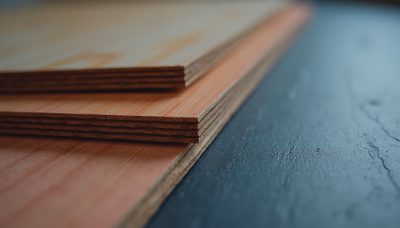
Maintenance is straightforward. Sweep or vacuum regularly. Damp-mop with a hardwood cleaner — nothing wet. The factory finish on pre finished hardwood flooring is UV-cured aluminum oxide, which is harder than anything a crew can spray in your living room. I've seen these finishes hold up to dogs and kids for 15 years without a refinish. The downside is that when you do dent or scratch a board — and you will — you can't just touch up a spot. The bevels trap dirt, and refinishing pre finished is harder than sanding a flat site-finished floor. You have to sand through the bevels, which removes more wood and shortens the floor's life span. Most pre finished floors have a wear layer of 2-4 mm. That's good for one or two sandings in its lifetime. Compare that to site-finished solid oak at 5/8 inch thick, which can be sanded four or five times. So if you want a floor that can be refinished repeatedly, site-finished is better. But if you plan to replace the floor in 20-30 years anyway, pre finished saves you hassle now.
When Pre Finished Makes Sense (and When It Doesn't)
I choose pre finished hardwood flooring when the homeowner wants to move in fast, when the subfloor isn't perfect, when they want a guaranteed finish look that won't vary with humidity, and when they understand that in 20 years they'll probably replace the floor anyway rather than refinish it. The micro-bevels on pre finished boards hide minor subfloor imperfections that would show up as lippage on a site-finished floor. If your subfloor isn't perfectly flat — and whose is? — pre finished gives you some forgiveness. I also prefer engineered pre finished for basements or over radiant heat systems because it's dimensionally stable. On the flip side, I still recommend site-finished when a client wants a truly flat surface with custom stain color, or when the budget is really tight and they have the patience to live with dust for a week. Historic homes with original wide-plank heart pine? Refinish that in place. Pre finished is a modern product for modern lifestyles.
TL;DR: Pre finished hardwood flooring saves you money and time, and the factory finish is tougher than anything a crew can do on-site. Accept the bevels and know you'll replace the floor in 20 years instead of refinishing it. That's a trade-off most homeowners will take. I did.
Travellers Write
No letters yet — be the first traveller to write.