The first mistake homeowners make with carpet installation cost is looking only at the roll price. Carpet is not a rug you unroll and walk away from. You are paying for padding, tack strips, seams, furniture moving, disposal, floor preparation, and the installer’s time. For a typical room, a realistic installed budget is about $2 to $8 per square foot. High-end wool or complicated stairs can push that number well beyond $10 per square foot.
I spent 18 years installing floors, and I saw plenty of homeowners get burned by a suspiciously cheap quote. The material looked affordable until the installer added $450 for removal, $300 for pad, and another charge for a plywood repair nobody mentioned during the first visit. Here is how to read the numbers before somebody starts tearing up your house.
The basic carpet installation cost breakdown
For ordinary residential carpet, expect roughly $1 to $5 per square foot for the carpet itself. Entry-level polyester might run $1 to $2.50, while better nylon, patterned carpet, or dense premium styles can cost $3 to $7 or more. Padding commonly adds $0.50 to $1.50 per square foot. Installation labor often falls between $0.75 and $2.50 per square foot, depending on the room layout and local labor rates.
That puts a straightforward 12-by-15-foot bedroom, or 180 square feet, in the neighborhood of $500 to $1,600 before unusual repairs. The lower number assumes inexpensive carpet, a normal rectangular room, and a usable subfloor. The higher number buys better material and includes a more capable crew. Carpet installation cost rises quickly when the installer must work around closets, built-in cabinets, fireplaces, or multiple doorways.
Do not compare a quote for carpet alone with a quote that includes pad and labor. That is how a $1.99-per-square-foot advertisement becomes a $5-per-square-foot invoice.
What padding does to the final price
Padding is not the place to save every dollar. It supports the carpet, affects how it feels underfoot, and helps the carpet recover after furniture presses into it. A cheap, thin pad under decent carpet can make the whole floor feel tired in two years. I have pulled up brand-new carpet where the homeowner chose the least expensive pad, and the traffic lanes were already obvious.
For most bedrooms and living rooms, I prefer a quality rebond pad in the 6- to 8-pound range, often around 7/16 inch thick where the carpet manufacturer allows it. That may cost an extra $100 to $250 on a moderate project, but it is money better spent than upgrading from mid-grade carpet to a flashy pattern nobody notices after the furniture goes back.
Dense foam or rubber padding costs more, sometimes $1.50 to $3 per square foot, but it can make sense in a basement, nursery, or heavily used family room. The right choice depends on the carpet specification and the room, not just the salesperson’s favorite package.
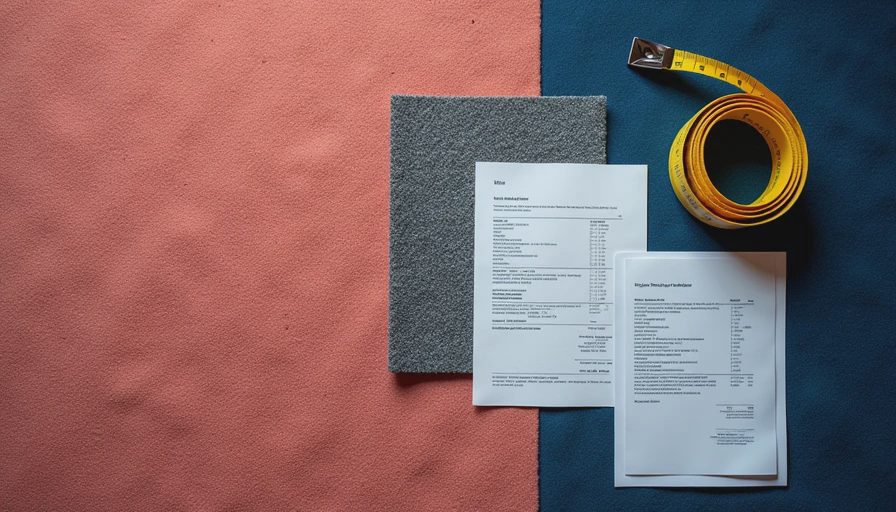
Removal, disposal, and floor preparation
Old carpet removal usually adds $0.50 to $1.50 per square foot. Disposal can be a separate $75 to $250 charge, especially when the crew must haul several rooms to a transfer station. Removing glued carpet or carpet installed over old tile takes longer than pulling up a standard stretch-in installation. Tack strips may also need to come out if the new floor plan changes.
The subfloor is where carpet installation cost gets unpredictable, but the causes are concrete. A few squeaks and loose staples might add $50 to $150. Replacing damaged plywood can cost $200 to $800 in a room. Moisture damage, pet stains, or a rotten area near a door can make the repair larger. If the concrete slab is damp, carpet should not be installed until the moisture problem is addressed. Covering it only hides the trouble until the smell and staining return.
Ask for floor preparation as a written line item. “Prep included” is vague. You want to know whether that means vacuuming and staple removal or actual patching and leveling.
Stairs, seams, and awkward rooms
Stairs are priced differently from open rooms because every step is hand work. Carpet installation cost for stairs often runs $75 to $150 per step, depending on whether the installer wraps each tread and riser, uses separate runners, or works with a patterned material. A straight flight of 13 steps can therefore add $975 to $1,950. Landings, bullnose edges, and transitions add more.
Seams are another place where experience matters. A good installer plans seams away from windows, major walking paths, and strong natural light when possible. Patterned carpet requires extra material and careful matching. You may pay 10% to 20% more in material because the crew has to align the design instead of simply cutting the shortest route.
Rooms are rarely as square as homeowners think. A 400-square-foot basement can require 500 square feet of carpet after accounting for roll width, seam placement, and waste. Buying only the measured floor area is a reliable way to end up short on installation day.
A realistic example from a whole-house project
Let’s use a 1,200-square-foot carpeted area. Suppose mid-grade nylon costs $3.25 per square foot, quality pad costs $0.90, and installation runs $1.25. That is $5.40 per square foot, or $6,480 before removal and repairs. Add $720 for old carpet removal, $150 for disposal, and $350 for minor subfloor preparation, and the working total becomes about $7,700.
A lower-cost polyester package might land near $4,800 to $5,800 installed. A premium nylon or wool project can reach $10,000 to $14,000 without being unreasonable, especially if it includes stairs and difficult furniture moving. The important point is that carpet installation cost should be judged by the complete scope, not the cheapest square-foot number in a flyer.
When I priced jobs, I also measured the five-year view. Saving $1,500 today is not a bargain if the cheap carpet mats down in three years and requires another removal charge. A solid mid-grade carpet with good pad is usually the lane I recommend for a normal family home.

How to get a quote that will hold up
Start by measuring each room, but use your measurements as a sanity check rather than the final order. Ask at least two installers to visit the house. A real site visit catches uneven subfloors, tight stair turns, damaged tack strips, and furniture that cannot fit through the doorway.
Your written quote should identify the carpet brand and style, total square footage, waste allowance, pad type and thickness, installation labor, old-floor removal, disposal, furniture moving, transitions, tack strips, seam charges, stairs, and floor repairs. If any item says “extra as needed,” ask for the unit price. For example, plywood repair might be listed at $4 to $8 per square foot, while a transition may cost $25 to $75 each.
Be cautious with a quote that is dramatically below the others. It could be legitimate, but it may also exclude removal, pad, or preparation. I once lost money on a job because I assumed a basement slab was dry and flat. It was neither. The lesson was simple: look underneath before promising a finished price.
When carpet is the right answer
Carpet still makes sense in bedrooms, finished basements, upstairs hallways, and rooms where warmth and noise control matter. It is softer than hard flooring, less expensive than many full-house hardwood projects, and faster to install when the subfloor is ready. Neutral carpet can also make a house feel finished without swallowing the budget.
It is a weaker choice in bathrooms, laundry rooms, entryways that see wet shoes, and homes with recurring moisture problems. In those areas, tile or resilient flooring generally handles the conditions better. Do not install carpet simply because the material quote looks low; install it where the room’s use supports it.
The best carpet installation cost is not the smallest number. It is the price of a floor that lays flat, seams disappear, the pad feels right, and the crew does not leave you with a repair bill two weeks later. Floors take a beating every day. Don’t let them beat your budget too.
TL;DR: Budget $2 to $8 per square foot installed, price the pad and prep separately, and get stairs and removal in writing before the first roll comes through the door.

Travellers Write
No letters yet — be the first traveller to write.