Every week, I get a call from a homeowner told their hardwoods need to be torn out and replaced. Before you hand anyone a check for $8,000, let's talk about sandless floor refinishing. This method uses a floor buffer with an abrasive pad to rough up the existing finish, then applies new coats of polyurethane on top. No drum sander, no sawdust clouding the house, no lost weekend. The price is often less than half of a full sand-and-finish job. For the right floor, it's the smartest money you'll spend. For the wrong floor, it's money poured down the drain.
What Sandless Floor Refinishing Actually Is
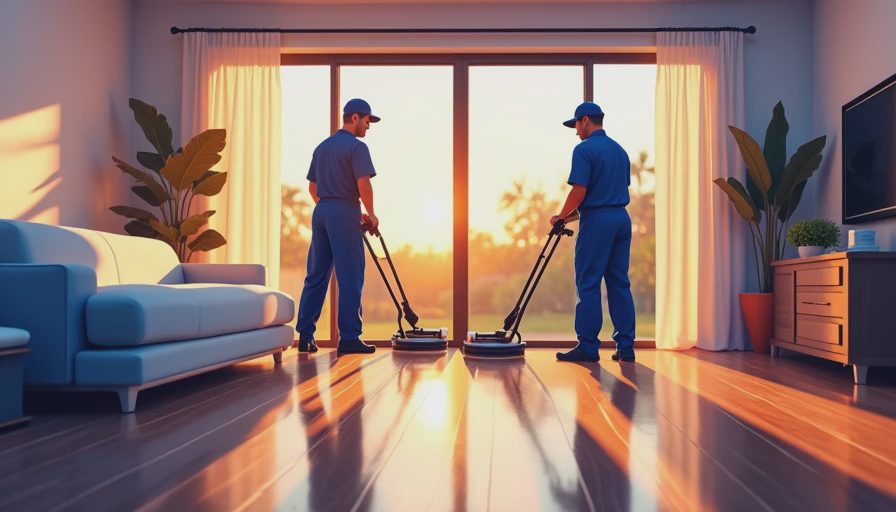
The technical name is abrasive screening, or buff-and-coat. A contractor runs a heavy buffer with a screen disc over the floor. That screen scratches the top layer of the existing polyurethane deep enough to create a mechanical bond. Then a fresh coat of finish goes on, usually two coats. The whole thing takes one day, and you can walk on it the next morning. Compare that to a full refinish, where the floor is sanded down to bare wood, stained, and finished over three or four days.
Here's what nobody tells you: sandless refinishing only works if the old finish is basically intact. If there are bare spots where the finish has worn through, those spots will soak up the new finish and show dark blotches. I've walked into houses where someone did this on a worn floor and it looked worse six months later. The first thing I do when I get a call is kneel down and look at the traffic lanes.

When Sandless Floor Refinishing Is Worth It
If you're asking whether sandless floor refinishing is worth it, start with the floor, not the price. You're a candidate when the existing finish is dull but still covering every inch of wood—no bare spots, no deep scratches you can catch with a fingernail, no warping. Water-based finishes bond fine with most oil-based finishes. In my own dining room, I used the same approach for about $350 in materials. A contractor charges $1.50 to $3.50 per square foot. A full sand and finish runs $3 to $6. On a 1,200-square-foot floor, the savings can top $3,000.
The Catch: When Sandless Floor Refinishing Fails
The biggest mistake I see is someone hiring the cheapest handyman to do sandless floor refinishing on a floor that's already been refinished too many times. Every time you sand or screen, you shave off a bit of wood. A solid oak floor can handle several full refinishings, but a floor that's been sanded four or five times is getting thin. On a thin floor, you might be better off leaving it alone, or replacing it. Another red flag: a wax finish. Modern polyurethane won't stick to wax. If you don't know the floor's history, do the mineral spirits test. Wet a rag with mineral spirits and rub a spot. If it picks up yellow-brown wax, skip this method entirely.
How to Know If You're a Candidate
Before you schedule anything, grab a flashlight and walk the traffic paths. If you can see bare wood where the finish has worn away, a sandless floor refinishing will not fix that. If there are black marks from pet claws that have penetrated the finish, those will show through the new coat. If you feel a rough texture, that floor needs a full drum sand. Another good test is the water drop. Put a small drop of water on the floor and wait 30 seconds. If it beads up, the finish is still sealing. If it spreads and darkens the wood, the finish is compromised, and I'd lean toward a full refinish.
A Real Job From My Files
Last year, a couple in Kirkwood called me to check their 1930s oak floors. They'd been told by a big-box installer that the floors were too far gone and needed $6,000 worth of ripping out. When I got there, the floors were dull and scratched, but the finish was still intact. I suggested this method instead. We buffed, spot-repaired two boards, and put on two coats of water-based polyurethane for $2,200. They moved furniture back the next day. On the flip side, I saw a homeowner who paid $800 for a Craigslist special; three months later the finish was peeling because the guy skipped the screening. That floor still needed a full sand, so they paid twice. Don't be that person.
The Bottom Line
Sandless floor refinishing is a legitimate, money-saving option when the old finish is intact but dull. If you can walk the floor without seeing bare wood or deep scratches, get a quote for sandless floor refinishing before you sign off on a full replace or a full resand. I've refinished over 200 floors in my career, and I've used this method on maybe 30% of them because the condition was right. The other 70% needed the real thing. The skill is knowing which bucket your floor is in.
TL;DR: Screen and recoat before you sand. Sand before you replace. Call me crazy. Then call me after you get the estimate.

Travellers Write
No letters yet — be the first traveller to write.