The Question I Get Asked More Than Any Other
Homeowners sit across from me at the kitchen table and ask the same thing: “Should I go with engineered or solid hardwood?”
I used to give a long technical answer. Now I tell them the truth based on what I’ve seen after ten years of checking back on jobs.
Floors take a beating every day. Don’t let them beat your budget too.
My 10-Year Real-World Test
Over the years I’ve made it a habit to check in on jobs I did a decade earlier. Here’s what the data from actual homes shows.
Engineered Hardwood Performance (10 Years Later)
Stability: Excellent. Much less seasonal movement.
Appearance: Still looks good in most cases, especially thicker wear layers (3/8" or more).
Refinishing: Possible 1–2 times depending on thickness, but more limited than solid.
Durability: Holds up well to normal family life if quality product was used.
Common issues: Wear layer delamination in lower quality products, edge damage in high-traffic areas.
Solid Hardwood Performance (10 Years Later)
Stability: More movement. Gaps in winter, some cupping in summer if humidity isn’t controlled.
Appearance: Develops beautiful patina and character over time.
Refinishing: Can usually be sanded and refinished 2–4+ times.
Durability: Outstanding when properly maintained.
Common issues: Requires more ongoing care, occasional board replacement.
Head-to-Head Cost Over 10 Years
Let’s run real numbers on a 1,200 sq ft main level (installed costs):
Engineered Hardwood:
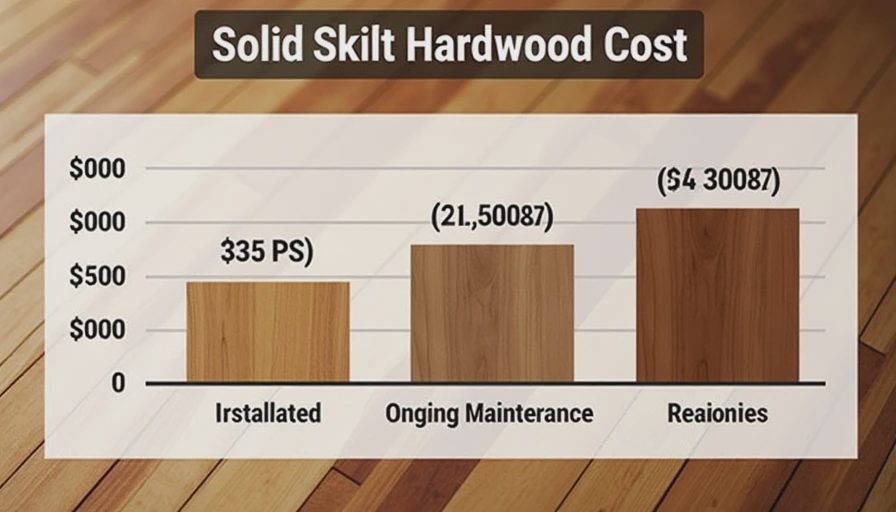
Initial install: $7,500 – $11,000
Potential refinish at year 8-10: $3,000 – $4,500
10-year total: ~$10,500 – $15,500
Solid Hardwood:
Initial install: $9,500 – $14,000
Refinish at year 8-10: $3,500 – $5,000
10-year total: ~$13,000 – $19,000
Engineered often wins on pure cost, especially if you might move in 7–10 years. Solid pulls ahead for long-term homeowners who value refinishing ability and classic look.
When I Recommend Engineered
Homes with radiant heat
Areas with humidity fluctuations
Multi-story homes (less weight on structure)
Budget-conscious buyers
Faster install timelines
When I Recommend Solid Hardwood
Historic homes or matching existing floors
Homeowners planning to stay 15+ years
Areas where maximum refinishing potential matters
Buyers who love traditional character and patina
The Details That Actually Matter
Thickness of the wear layer is more important than “engineered vs solid” marketing. A good 1/2" engineered with a thick sawn face often outperforms cheap 3/4" solid.
Climate control in your house matters more than the flooring type. I’ve seen poorly maintained solid floors fail faster than well-cared-for engineered.
My Personal House Rule
In my own home we have solid hardwood in the main living areas (because I like sanding and refinishing) and engineered in the basement (for stability). Both have performed well for eight years so far.
Bottom Line After 10 Years of Testing
There is no universal winner. Engineered usually gives better value for most modern families. Solid hardwood rewards homeowners who plan to stay long-term and maintain their floors properly.
Choose based on your timeline, budget, and how much you care about future refinishing. Don’t fall for marketing slogans — look at real performance in real homes.
Floors take a beating every day. Don’t let them beat your budget too.

Travellers Write
No letters yet — be the first traveller to write.