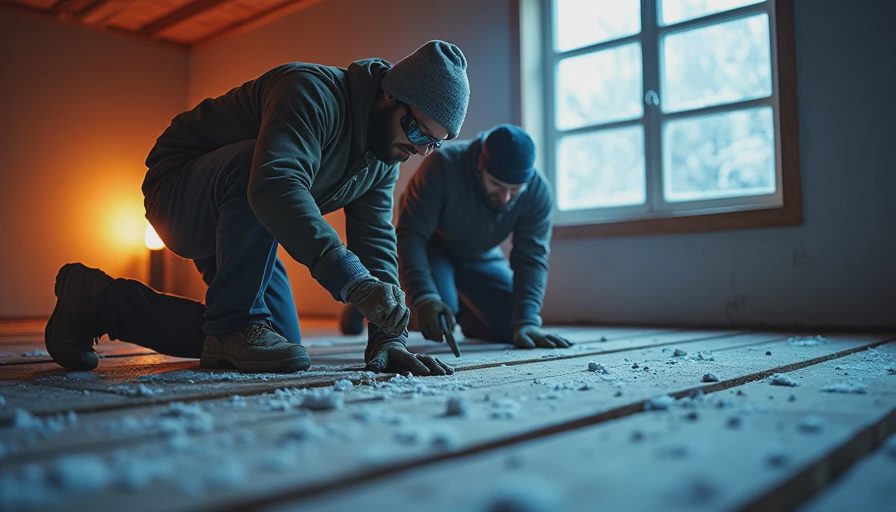
How I Ended Up in a Freezer
It was mid-January and the client was desperate. Their new construction house had been delayed and they needed the hardwood installed before closing. The heat wasn’t turned on yet. “We’ll have space heaters,” they said.
I should have listened to my gut. Instead, I listened to the promise of a big check.
Floors take a beating every day. Don’t let them beat your budget too.
What “Cold” Actually Means on a Job Site
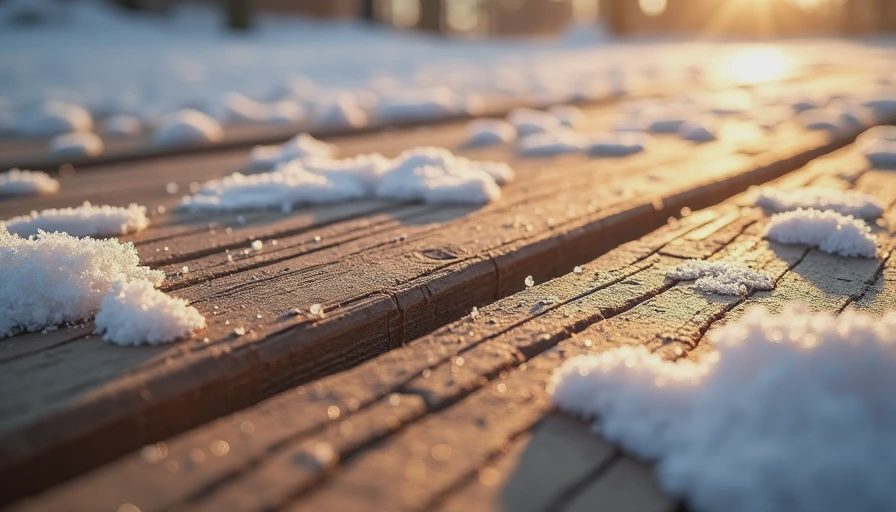
When we arrived at 7:30 AM, the indoor temperature was 34°F. By noon, despite space heaters, it barely reached 48°F. Wood reacts dramatically to temperature and humidity, and we were about to learn that the hard way.
Hardwood flooring needs to acclimate properly. In these conditions, proper acclimation was impossible. But the closing date was fixed, so we pushed forward.
The Problems We Fought All Week
Frozen Adhesive — The glue was thick and slow to set. We had to keep it near heaters just to make it workable.
Board Expansion Issues — The wood was cold and contracted. We knew it would expand once the heat was turned on.
Nailing Difficulties — Pneumatic nailers didn’t work as well in the cold. Manual adjustments were constant.
Personal Discomfort — My crew was bundled up like we were ice fishing. Finger dexterity suffers when you’re freezing.
Quality Control — It’s hard to do your best work when you’re constantly trying to stay warm.
What Happened After the Heat Came On
The house finally got heat two days after we finished. Within a week, the homeowner called — some boards were cupping and joints were tight. Exactly what I had warned them about.
We went back and made adjustments: fixed a few peaked areas, added some strategic relief cuts, and advised them on proper humidity control going forward. It ended up okay, but it took extra work and created unnecessary stress for everyone.
The Lessons I Carry From That Job
Never install hardwood without proper acclimation and climate control.
Charge appropriately for extreme conditions — I underbid this one badly.
Set clear expectations with clients about weather-related risks.
Trust your experience when something feels wrong, even if it means losing the job.
I now have a firm policy: no hardwood installation in unheated spaces during winter. Some risks aren’t worth taking no matter how much they pay.
What I Would Do Differently Today
If I faced the same situation now:
Insist on waiting until the HVAC is fully operational and the house has been at proper temperature for at least two weeks.
Or require the client to sign a detailed waiver acknowledging the risks.
Price the job significantly higher to account for the difficulty and potential callbacks.
The Human Side
My crew still jokes about that job as “the freezer install.” We drank more coffee than wood glue that week. But it became one of the best teaching experiences of my career.
Sometimes the most painful jobs teach you the most valuable lessons.
Floors take a beating every day. Don’t let them beat your budget too.
Travellers Write
No letters yet — be the first traveller to write.