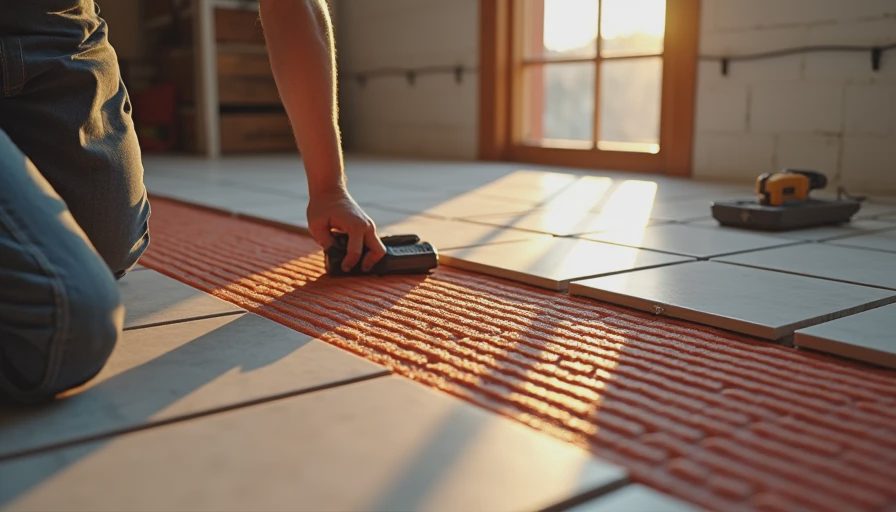
The Job That Made Me Question My Sanity
It was supposed to be a standard master bathroom tile job. The client had recently installed electric radiant heat mats under the floor and wanted large-format porcelain tile on top. “Should be pretty simple,” they said.
Famous last words.
By the end of the project I had spent twice as much time as anticipated, dealt with multiple callbacks, and learned more about radiant heat than I ever wanted to know. I definitely should have charged double.
Floors take a beating every day. Don’t let them beat your budget too.
The Unique Challenges of Radiant Heat + Tile
Radiant heat adds several complications most homeowners (and some contractors) don’t fully appreciate:
1. Heat Transfer and Tile Thickness
Thicker tile can slow down heat response time. We had to carefully balance tile thickness with the output of the heating system so the floor would actually get warm when needed.
2. Expansion and Movement
Tile and radiant systems expand at different rates. If you don’t account for this properly, you get cracking grout or loose tiles later.
3. Adhesive and Membrane Requirements
You need special thinset and often an uncoupling membrane to prevent the heat cycles from destroying your tile work over time.
4. Testing and Controls
The heating system needs proper testing before, during, and after installation. One wrong setting and you risk damaging the entire floor.
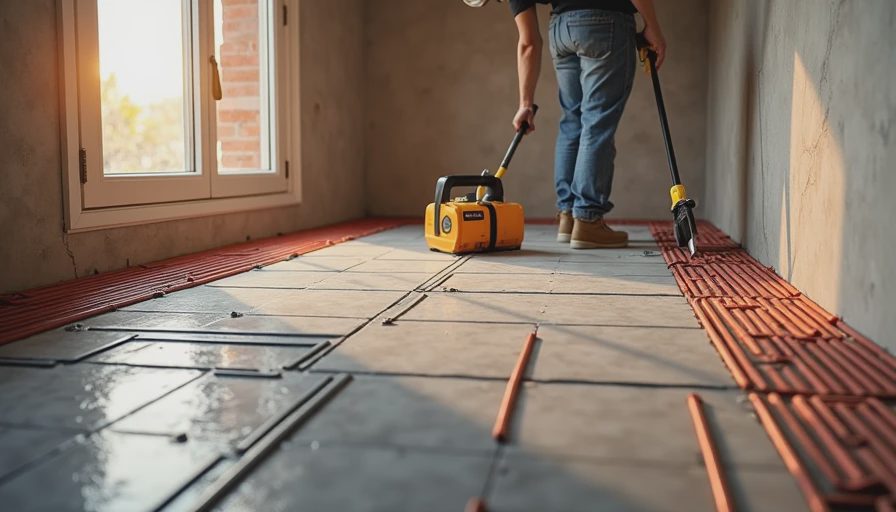
What Went Wrong on That Job
Looking back, my mistakes were clear:
Underestimated the complexity in my original bid
Didn’t insist on a full system test before starting tile work
Used a standard membrane instead of the higher-end uncoupling version recommended for radiant
Didn’t fully educate the client on usage guidelines
The result? Minor cracking in a few grout lines after the first heating season and some areas that didn’t warm evenly. We fixed it, but it cost everyone time and money.
What I Do Differently Now
After that experience, my process for radiant heat tile jobs changed completely:
Higher minimum pricing for these projects
Mandatory pre-installation meeting with the heating system installer
Always use premium uncoupling membranes
Thorough testing protocol at every stage
Detailed homeowner instructions for system operation
Longer warranty discussions
Practical Advice If You’re Considering Tile Over Radiant
Hire specialists — Not every tile installer understands radiant systems well.
Test the system thoroughly before covering it up.
Use proper materials — Don’t cheap out on membranes and thinset.
Plan for slower heat response with large format tile.
Set realistic expectations about evenness and warm-up time.
Budget extra — These jobs almost always take more time than standard tile installs.
The Right Way to Do It
When done correctly, tile over radiant heat can be fantastic. The gentle warmth underfoot in a bathroom is hard to beat. But it requires more planning, better materials, and more expertise than a standard tile floor.
My Bottom Line
I still take radiant heat tile jobs, but I price them accordingly and set very clear expectations. The homeowner who understands the complexities and budgets properly ends up much happier.
If you’re planning this type of project, take the time to do it right. Cutting corners here gets expensive fast.
Floors take a beating every day. Don’t let them beat your budget too.
Travellers Write
No letters yet — be the first traveller to write.