The first thing homeowners get wrong about parquet flooring is assuming that an ugly surface means the whole floor is finished. I have walked into plenty of St. Louis homes where the blocks were gray, scratched, water-stained, and hidden under three coats of questionable wax. Most owners were already pricing demolition. Several only needed a proper inspection and a patient sanding job.
Parquet is made from small wood pieces arranged in geometric patterns, commonly herringbone, basketweave, or square designs. It has character that factory-perfect planks cannot duplicate. The catch is that its thin blocks, adhesive, direction changes, and old subfloors demand more care than a straightforward strip floor. Here is how I decide whether to restore it, repair it, cover it, or remove it.
What Makes Parquet Flooring Different
Traditional parquet flooring is usually solid wood, although modern products can use engineered construction. Older blocks were often installed over concrete, wood subflooring, or even asphalt-based adhesive. The pattern looks simple until you try to repair one corner. Every piece has to match the grain direction, thickness, and layout around it.
That pattern creates two practical issues. First, sanding requires a steady hand. A flooring machine moving across ordinary planks follows one grain direction. With parquet, the grain changes every few inches, so aggressive sanding can create swirl marks, dish out soft blocks, or remove too much material. Second, moisture damage does not always stay local. A leaking dishwasher or basement dampness can loosen dozens of blocks beyond the obvious dark spot.
On a recent 1950s ranch, the owners thought a 40-square-foot dining room needed replacement. The floor looked nearly black near the exterior wall. After removing a baseboard, I found the damage stopped at the edge of a previous patch. We replaced 14 blocks, screened the room, and applied finish. That saved them several thousand dollars and preserved the original pattern.
Inspect Before You Price the Job
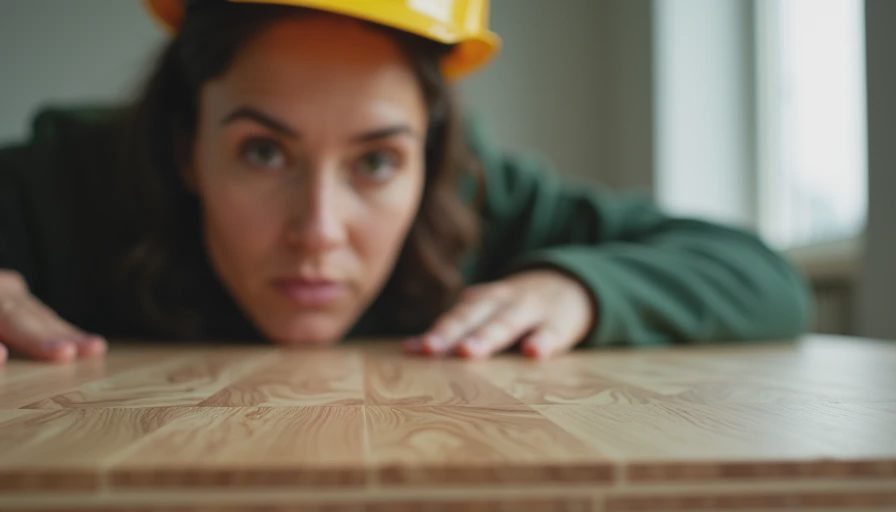
Start by checking whether the blocks are still attached. Walk slowly across the room and listen for hollow sounds, movement, or squeaks. Press a thumb against damaged pieces. Firm wood with surface discoloration is a very different problem from loose wood that flexes under your weight.
Look for moisture sources before touching a sander. Check plumbing walls, exterior doors, windows, HVAC drains, and basement ceilings. A moisture meter is useful, but it does not replace finding the leak. If the source remains active, a beautiful repair will fail again.
Then inspect the wear layer. Older solid blocks can often tolerate sanding, but not every floor has that margin. Some parquet flooring was made with thin pieces that have already been refinished several times. If the tongue, groove, or adhesive lines are showing, another heavy sanding can ruin the floor. A professional can test an inconspicuous area near a closet or register.
Do not ignore the subfloor. A floor that feels uneven may have loose blocks, but it may also be sitting over a sagging joist, cracked slab, or poorly patched underlayment. Covering that movement with new material only hides the bill for a while.
Repair and Refinishing Costs
For a sound floor needing cleaning, light abrasion, and finish, expect roughly $3 to $6 per square foot in many markets. Full sanding and refinishing commonly lands around $5 to $9 per square foot, with small rooms costing more because setup and dust control take nearly as long as they do in a larger room.
Individual block repairs often run $8 to $20 per piece when the replacement material is available. Matching old wood is the hard part. A new oak block may look too pale beside 70-year-old oak until stain and finish bring the colors closer. If the pattern has been interrupted by several repairs, labor can reach $12 to $25 per square foot.
Replacement is a different category. Removing parquet flooring, scraping adhesive, leveling the surface, and installing new hardwood or engineered wood can total $10 to $20 per square foot. A 300-square-foot room can therefore turn into a $3,000 to $6,000 project before furniture moving and trim work. That is why I price restoration first when the wood is fundamentally sound.
When Replacement Is the Better Call
I am not sentimental about every old floor. Parquet flooring should be replaced when large areas are loose, swollen, badly cupped, or contaminated by a long-term moisture problem. If the adhesive has failed across half the room, selective repair becomes a slow way to buy an uneven result.
Replacement also makes sense when the existing floor sits too low, too high, or too damaged to meet the adjoining rooms. A kitchen renovation can expose this problem. New cabinets, appliances, and stone tile need stable elevations. Saving a floor at the doorway is not a victory if the refrigerator cannot be installed correctly.
Watch for asbestos concerns in old adhesive, especially in homes built before the late 1970s. Do not grind or scrape suspicious black adhesive casually. Testing and proper removal can add cost, but breathing dust is not a reasonable shortcut. The same rule applies to moldy wood and heavily contaminated flooring: stop demolition and get qualified guidance.
Installation Details That Decide the Result
A new parquet floor needs a flat, dry, structurally sound base. For wood subfloors, installers commonly check flatness with a long straightedge, fasten loose panels, and address high or low spots before laying material. Concrete installations need moisture testing and a compatible adhesive system. The exact product matters; the glue that works for one block construction may fail with another.
Layout deserves more attention than most homeowners expect. A room rarely measures perfectly square, so the installer establishes centerlines and balances cuts at the walls. Starting from one crooked corner can make the entire pattern look like it is sliding downhill. Leave the manufacturer-required expansion gap around the perimeter, then cover it with baseboard or shoe molding.
I would rather see a homeowner spend money on subfloor preparation than on premium blocks installed over a wavy surface. Good parquet flooring can tolerate normal household traffic. It cannot correct bad layout, trapped moisture, or a floor that moves underneath it.
Caring for the Floor After the Work
Use felt pads under chairs, lift furniture instead of dragging it, and place mats at exterior doors. Grit acts like sandpaper under moving feet. Clean with a barely damp microfiber mop and a wood-floor cleaner approved for the finish. Avoid soaking the floor and skip vinegar, steam mops, wax buildup, and generic polish that leaves a slippery film.
Keep indoor humidity reasonably stable, particularly through dry Midwest winters. Wood expands and contracts; large swings create open joints and stress at the edges. Wipe spills promptly, and investigate recurring dampness instead of repeatedly touching up the stain.
For most homes, parquet flooring is worth saving when the blocks are attached and the moisture problem is solved. Get one restoration estimate and one replacement estimate, but ask both contractors what they found below the surface. The cheapest written number is not useful if it leaves loose pieces, an uneven transition, or a leaking problem waiting underneath.
TL;DR: Sand it before you replace it. Call me crazy. Then call me after you get the estimate.



Travellers Write
No letters yet — be the first traveller to write.