Ask ten homeowners about glue down flooring and nine will screw up their face like they stepped in a tub of mastic. The tenth might be the guy who installed a click-lock floating floor and spent a year listening to it pop. I get both reactions. After 18 years of installing floors in St. Louis, I've seen glue down flooring work beautifully and fail badly. The difference usually comes down to one thing: prep.
Here's the short version. Glue down flooring is exactly what it sounds like. Every plank gets bonded to the subfloor with adhesive. No underlayment, no click-lock, no floating. It's the most common way to install luxury vinyl plank, or LVP, over concrete, and it's also how most engineered hardwood goes down when you don't want a hollow sound.
What Glue Down Flooring Actually Means
When I say glue down, I mean planks adhered directly to a clean, flat subfloor. For a basement slab, that's often the best option because the adhesive stops movement and feels solid underfoot. Glue down flooring has a sink-your-teeth-into-it feel that a click system can't match.
Modern adhesives are water-based urethane, not the old black mastic. They spread like cold butter, don't smell, and grip fast. Most glue down floors are set in 24 hours, though I tell customers to stay off the room for a full day.
The Real Cost of Glue Down Flooring Per Square Foot
Glue down flooring material runs $2 to $7 per square foot for a good LVP. Labor runs $2.50 to $5.50 if you hire it out. A 400-square-foot room might cost $1,800 to $4,500 installed, not counting prep. On a slab that needs patching and moisture testing, add $400 to $800.

I've installed glue down engineered oak from Mullican and Bruce; that runs $5 to $10 per square foot for material. Add labor and a 500-square-foot space can push past $7,000. It's quiet and feels closer to solid hardwood than anything I can install.
Prep Is What Makes or Breaks Glue Down Flooring
Before you order LVP, check the slab with a 10-foot straightedge. Tolerance for a glue down install is tighter than you think. No more than 3/16-inch variation in a 10-foot span. Concrete also needs a calcium chloride moisture test. If the reading is above the manufacturer's limit, you're looking at a moisture barrier or a different floor system.
Patching compounds run $30 to $60 a bag at Home Depot. Grinding high spots rents for about $80 a day. Homeowners skip this and feel a bump or a hollow spot within six months. Prep feels like wasted money until you're walking on that floor five years later.
Read the Manufacturer's Instructions
I know it sounds like filler, but the adhesive trowel notch size and open time are on the label for a reason. If the manufacturer says use a 3/16-inch V-notch, don't grab the 1/4-inch square trowel because it's closer. The difference in adhesive coverage can be the difference between a floor that lasts and one that curls at the seams. Last year alone I redid two jobs that failed because the installer ignored the recommended spread rate.
Glue Down vs. Floating Floors
Floating floors are faster and easier to replace, and they hide small subfloor imperfections. But on concrete, I steer people toward glue down. You get better sound insulation and fewer issues with temperature changes. Glue down flooring handles expansion because each plank is held by adhesive. The trade-off is permanence. You don't pick up a glued floor and move it.
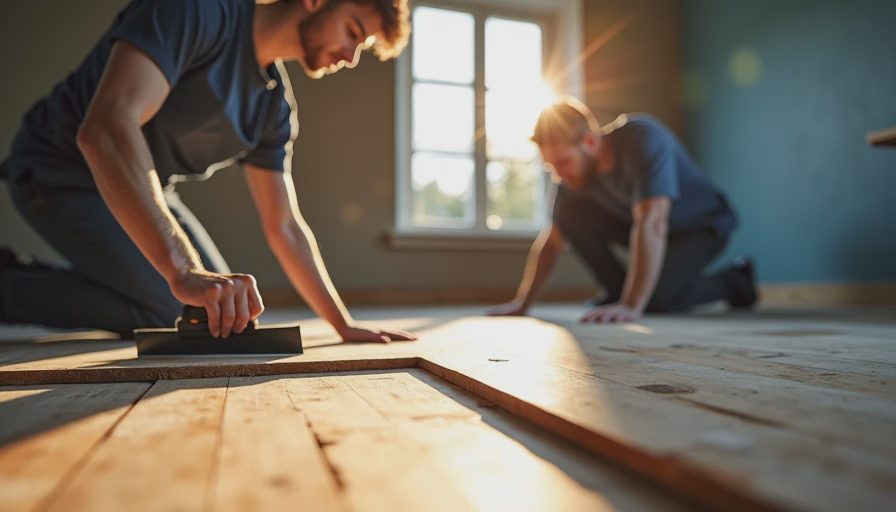
I've seen floating floors fail in basements when moisture gets trapped under the underlayment. A full adhesive bond avoids that risk. If you want a solid feel and you're on a slab, glue down is the better long-term play. If you're on a tight budget and can accept a little hollow sound, a floating floor can save you $1,000 on a 500-square-foot job.
Can You DIY Glue Down Flooring?
I've seen skilled DIYers outwork some contractors. But glue down is not the friendliest place to start. You spread adhesive in sections, let it tack up, and lay each plank before it skins over. Once it hits the floor, you have seconds to adjust. Pulling it up tears the backing.
Rent a 100-pound roller for $40 to $60 a day to press the planks into the adhesive. A 400-square-foot DIY job can save you $1,200 to $2,000 in labor. But I've also recalculated floors that buckled because a homeowner skipped rolling the planks. Use a product like COREtec Pro Plus HD, which is designed for glue down, and follow the trowel notch size exactly. It's a doable weekend project if you don't rush.
The Bottom Line
So is glue down the right call? If you're laying LVP or engineered hardwood over concrete and want a floor that stays put, yes. It costs a little more than floating, but it holds up better, doesn't hollow-sound, and feels permanent. Prep the substrate, buy good adhesive, and wait 24 hours before walking on it. My own basement has had a glue down floor since 2019, not a single popped seam. Floors take a beating every day. Don't let them beat your budget too.
Travellers Write
No letters yet — be the first traveller to write.