Vinyl plank layout patterns are the difference between a floor that looks like a budget hotel lobby and one that looks like it cost twice as much. I lost count of how many homeowners asked me to "just install it straight" and then stared at the seams all day. The way you lay the planks matters more than the color, thickness, or brand. Get the layout wrong and no one will notice your expensive underlayment. Get it right and people will ask if it's real hardwood.
Why Layout Matters More Than the Plank Color
Here's the thing nobody tells you at the home center: vinyl plank is a repeating pattern. Every plank has the same grain, same knots, same texture. When you install planks side by side with no stagger, that repetition lines up like a brick wall drawn by a machine. But if you offset the end joints by at least six inches, the pattern breaks up and the floor starts to look organic.
I remember a basement job in a 1970s split-level outside Kirkwood, Missouri. The homeowner picked a nice oak-look LVP to save money by laying it herself. She followed the manufacturer's random stagger, but the spacing was so close the seams formed a zigzag. We tore it out and relaid it with a six-inch minimum offset. Suddenly that same floor looked like it belonged in a $700,000 remodel. What changed? Nothing but the vinyl plank layout patterns. The floor itself was identical.
That's the quickest win in flooring. A simple adjustment to the stagger costs zero dollars and changes the entire room. If you're on a budget, this is where you get your money's worth.
The Workhorses: Straight Lay and Staggered Offset
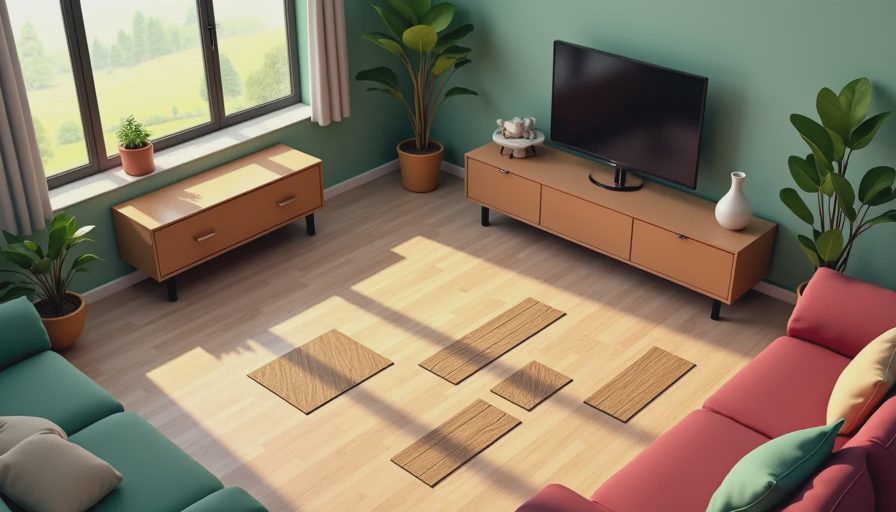
For most rooms, the simplest vinyl plank layout patterns are the straight lay and the staggered offset. In a straight lay, every plank runs parallel to the longest wall with no offset. That's fine for a workshop or a modern studio, but in a living room it magnifies every imperfection in the subfloor.
The staggered offset is the pattern I recommend for 90% of homes. Each row starts with a plank cut to a different length so the end joints land at random intervals. The key rule is a minimum six-inch offset from the seam below. If a joint lands closer, the floor can develop a weak spot and the locking system can fail. Mix lengths from multiple boxes so the grain doesn't repeat every third row.
Vinyl Plank Layout Patterns That Turn Heads: Herringbone and Chevron
If you want a floor that stops people, skip the straight rows. These vinyl plank layout patterns use shorter planks, usually around nine inches wide and up to 28 inches long, because the traditional 48-inch plank doesn't turn well at a 45-degree angle. Herringbone creates a classic broken V that looks like woven fabric. Chevron creates a clean continuous arrow with angled ends. Both look stunning, but they come with trade-offs.
You'll pay $0.50 to $1.00 more per square foot in labor. You'll waste 15% to 20% of material because of angled cuts. And a 300-square-foot room that takes two days to lay in a staggered pattern will take four or five days in herringbone. I've installed it in a few kitchens and one historic rehab in St. Louis. But if you plan to sell in five years, it's a selling point. If you'll live there for twenty, the novelty might wear off.
Diagonal and Mixed-Width Patterns: The Risk-Takers
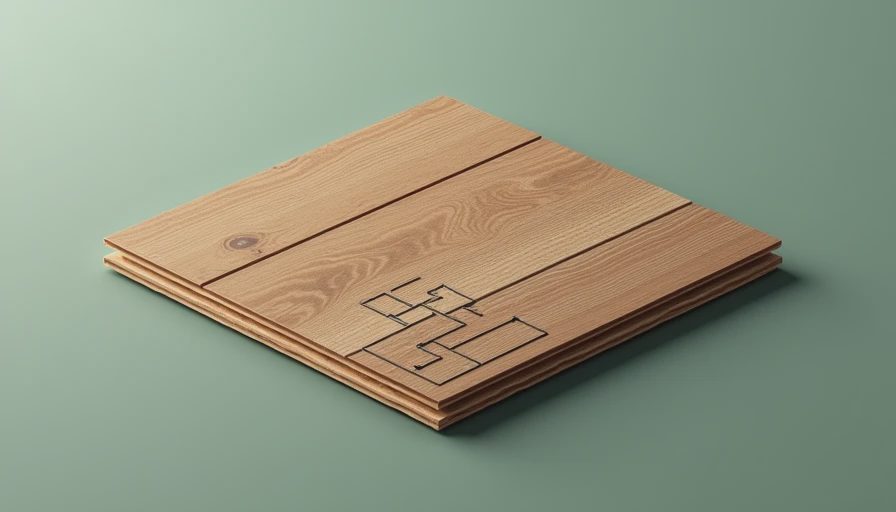
Diagonal layout runs planks at a 45-degree angle to the walls, making a small, narrow room feel larger. The downside is more waste and more cuts, and you'll do a lot of coping around baseboard.
Mixed-width patterns are the new trend. Manufacturers like COREtec and Shaw Floorte make boxes with two or three different width planks, typically 7 and 9 inches or 6, 8, and 10 inches. You install them randomly to create a rustic barn floor look. This pattern hides seams well, but it requires a careful stagger to keep the eye from spotting a repetitive sequence. I usually suggest it for bedrooms and family rooms.
How Much Do These Patterns Actually Cost?
For a typical 300-square-foot room, mid-grade LVP materials run about $2.50 to $4.00 per square foot, or $750 to $1,200. Labor adds $1.50 to $3.50 per square foot. A straight lay or staggered offset lands around $450 to $900 in labor for that room. Herringbone pushes labor to $3.50 to $5.00 per square foot, adding $1,050 to $1,500. That's a $600 jump.
With a straight lay, 5% to 10% waste is typical. With herringbone, 15% to 20%. If you're buying 400 square feet for a 300-square-foot room at $3 per square foot, that's $1,200 instead of $1,080. A $600 premium to transform the whole feel of a living room is worth it compared to a $3,000 upgrade to wider planks.
What I Tell Every Homeowner Before They Commit
If you're on a budget and this is your forever home, use a staggered offset. It's practical, installs fast, and hides seams well. If you're doing a small powder room or entryway, herringbone is a low-risk splash of style because there's less area to waste. If you have a large great room, diagonal can make it feel longer, but only if you accept the waste.
Before you buy, lay out a few rows on the floor without locking them together. Move the pieces around and walk away for ten minutes. That's the best way to see if the layout pattern will drive you crazy. And check the warranty requirements; some brands void it if you don't maintain a certain stagger.
TL;DR: Choose your vinyl plank layout patterns before the color. Staggered offset is the safe bet, herringbone the showpiece, diagonal the wildcard. Floors take a beating every day. Don't let them beat your budget too.


Travellers Write
No letters yet — be the first traveller to write.