The one thing most homeowners get wrong about carpet installation is thinking a knee kicker is good enough for every room. It is not. A carpet power stretcher gives you the leverage to pull carpet tight across a room, lock it onto the tack strips, and prevent the loose waves that show up six months later. I have installed enough carpet to know that stretching is not the glamorous part of the job, but it is where a decent installation separates itself from a cheap one.
If you are replacing carpet in a bedroom, hallway, basement, or full house, the tool matters. Carpet is flexible, but it is not forgiving. A poor stretch leaves wrinkles, bubbles, open seams, and edges that pull loose. Those problems usually mean paying for another installation instead of saving money with a weekend rental.
What a carpet power stretcher actually does
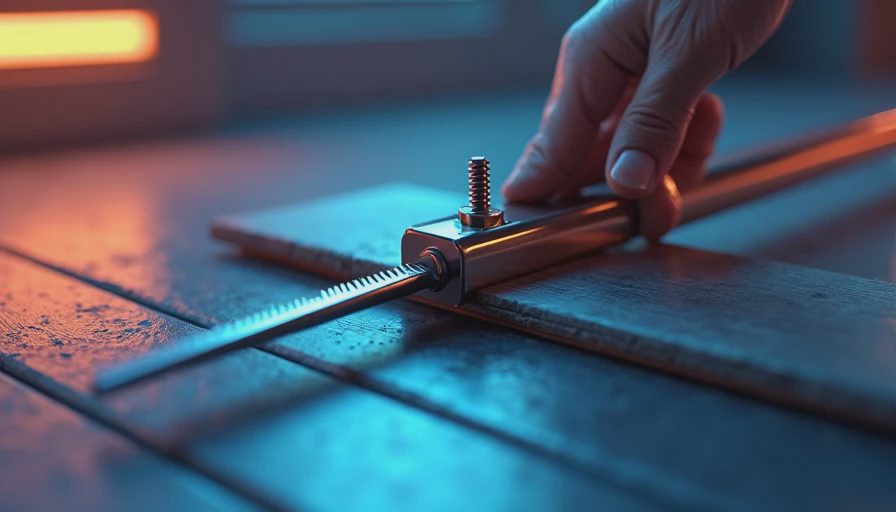
A carpet power stretcher uses a long metal tube, a padded head, and a series of adjustable teeth to push against one wall while pulling the carpet toward the opposite wall. You set the head several feet from the wall, adjust the angle, and apply controlled pressure with the lever. The carpet moves gradually rather than being yanked in one violent pull.
That controlled movement is the important part. Carpet backing needs to be stretched evenly in both directions. If you simply kick the carpet toward the wall, you can make one section tight while leaving another section loose. A carpet power stretcher distributes force across a wider area, which is why professional installers use one on most rooms larger than a small closet.
The tool does not replace preparation. Tack strips must be secure, the pad must lie flat, seams must be properly bonded, and the subfloor needs to be reasonably clean. Stretching bad preparation only hides the problem for a short time. Then the carpet finds a way to complain.
Do you need one for your room?
For a small bedroom under roughly 100 square feet, a skilled installer may use a knee kicker along with careful hand work. For a larger bedroom, living room, basement, or open floor plan, I would use a carpet power stretcher without debating it. The wider the room, the more difficult it becomes to create even tension with a knee kicker alone.
A power stretcher is especially useful when the carpet has a pattern, a dense backing, or a seam. Patterned carpet exposes small alignment errors. Dense commercial-style carpet can fight back hard enough to leave your knees and shoulders feeling like you lost an argument with a concrete mixer. A good stretch also helps seams stay closed and reduces the chance of carpet separating at a doorway.
You should also consider the carpet's age. Older carpet that has been loose for years may have permanent creases or damaged backing. A carpet power stretcher can remove ordinary wrinkles, but it cannot restore fibers crushed by furniture or repair backing that has already broken down. Before renting equipment, lift a corner and inspect the material. If the backing flakes, cracks, or feels brittle, replacement is usually the better use of your money.
Renting versus hiring an installer
Rental stores commonly charge around $30 to $60 per day for a basic power stretcher, with separate charges for a knee kicker, seam iron, seam cutter, or additional accessories. A weekend rental can easily reach $80 to $150 after fees. That still sounds cheap next to professional labor, but the rental is only one part of the job.
You may also need a hand stapler, utility knives, seam tape, a row cutter, a stair tool, a hammer, and a carpet trimmer. Consumables can add $50 to $150 depending on the room. If you damage a seam or cut the carpet short at a wall, the replacement cost can exceed the original labor savings. I lost money on a basement job early in my career because I assumed a tight room would be simple. The room was not simple; the doorway angles were the problem.
Professional carpet installation often runs about $1 to $3 per square foot for labor, with stairs, furniture moving, seams, and difficult layouts adding more. On a 600-square-foot project, that can mean $600 to $1,800 in labor. The right comparison is not rental price versus labor price. It is total DIY cost versus the cost of correcting a bad installation.
How to use a carpet power stretcher safely
Start by removing base shoe or quarter-round where necessary and vacuuming the subfloor. Install or repair tack strips with the pins angled toward the wall. Lay the pad with seams tight, tape the joints, and staple it without creating ridges. Position the carpet with extra material running up each wall.
Place the stretcher head several feet from the wall you are stretching toward. Protect finished walls with a piece of scrap plywood or a padded block at the opposite end. Set the teeth shallow enough to grip the backing without tearing the face yarn. Engage the lever slowly, then hook the carpet onto the tack strip while the tension is held.
Work in sections, moving from the center toward the corners. Do not take one giant pull across the entire room. Rotate your direction so the carpet gains tension lengthwise and widthwise. Trim only after the carpet is properly secured. Cutting early is how homeowners wind up with a visible gap that no baseboard can hide.
Common mistakes that make carpet look worse
The first mistake is stretching only the visible wrinkle. Wrinkles are usually symptoms of loose carpet across a broader area. Pulling one ridge tight can push the slack into the next section. Stretch the whole field, then work the perimeter.
The second mistake is over-stretching. Carpet is not a rubber sheet. Too much force can distort the pattern, separate the primary backing, or pull tack strips loose from a weak subfloor. If the lever requires your entire body weight, stop and inspect the setup. More muscle is not a substitute for correct positioning.
Another problem is ignoring temperature and moisture. Carpet should be installed in a normal indoor environment, not immediately after being stored in a freezing truck or damp garage. Let the material acclimate indoors. On concrete basement floors, address moisture concerns before installation; a power stretcher will not fix a damp slab or a musty pad.
Finally, do not forget transitions. Carpet that is tight in the center but loose at a doorway will eventually curl or pull free. Check tack strip placement, transition bars, and the direction of traffic before making final cuts.
My recommendation for a homeowner project
If you are refreshing one small bedroom and have patience, renting a carpet power stretcher can make sense. Watch a complete installation demonstration, practice on scrap carpet, and budget for the tools beyond the stretcher. Do not start with your most visible living room or a staircase.
For a whole-house installation, a patterned product, multiple seams, or a room with angled walls, hire an experienced installer. Ask whether the quote includes pad removal, furniture moving, seam work, transitions, and cleanup. A low quote that excludes those items is not really lower; it is just incomplete.
The carpet power stretcher is not a magic wand. It is a force multiplier in the hands of someone who understands tack strips, backing, seams, and room layout. Used correctly, it can make a carpet installation lie flat and stay flat. Used carelessly, it can turn an expensive roll of carpet into a very large throw rug.
Floors take a beating every day. Don't let them beat your budget too.
TL;DR: Rent a carpet power stretcher for a small, straightforward room only if you are willing to learn the whole installation process; for large rooms, seams, stairs, or expensive carpet, call a pro before the wrinkles become permanent.

Travellers Write
No letters yet — be the first traveller to write.