Ask ten showroom salespeople what the best tiles for kitchen floor are and you'll get ten different answers. That's because most have never installed a square foot professionally. I spent 18 years laying tile in kitchens across Missouri and Illinois, and I know which choices survive real life. A kitchen floor has to handle hot pans, spilled wine, muddy boots, and dropped jars without flinching.
The Kitchen Isn't a Showroom
Get the right mindset. A kitchen floor isn't a backsplash. It needs to be dense, hard, and slip-resistant. I've pulled out natural stone floors that looked stunning on day one but by year three were stained and etched. I've also seen cheap builder-grade ceramic hold up for 20 years because it was installed on a properly prepared substrate. The biggest mistake is shopping on looks first. Polished marble and tumbled travertine are porous and high-maintenance. If you want zero guilt when you slop red wine, you need a tile that shrugs it off. And it needs to look good enough that you won't hate it in five years.
Porcelain Is the Workhorse, Not Ceramic
Ceramic is baked clay; porcelain is baked clay with added feldspar and kaolin. That makes porcelain denser, harder, and far less porous. For a kitchen floor, porcelain is the answer. It absorbs almost no water, resists staining, and holds up to heavy traffic. If you're serious about the best tiles for kitchen floor, start with porcelain. I reach for through-body porcelain in my own home. I've used Emser and Daltile for years, but the brand matters less than the PEI rating. Look for a PEI of 4 or 5. Don't pay extra for glossy. A matte or satin finish hides scratches and gives better traction. That's why I tell every customer the same thing.
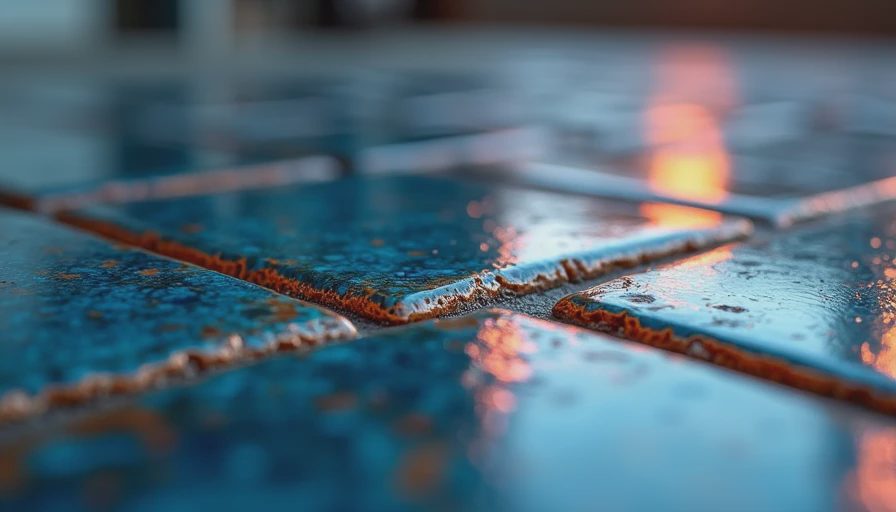
What the Big-Box Showroom Won't Tell You
Big-box stores sell a lot of glazed ceramic with a PEI rating of 2 or 3. That's made for walls, not kitchens. It will chip at corners when you drop a cast-iron skillet. Rectified tile means the edges are cut square, so you get narrow grout joints and a cleaner look. Another thing nobody tells you: natural stone like marble and travertine needs sealing before installation and regular resealing after. Most homeowners don't want that job. If you love the look of stone, buy a large-format porcelain that mimics it. You get the texture minus the upkeep.
My Go-To Picks After 18 Years
When a homeowner asks me to recommend the best tiles for kitchen floor, I give them a specific path. Start with a porcelain tile in a large format, 12x24 or 24x24. Bigger tiles mean fewer grout lines, less cleaning, and a more open look. In a small kitchen, a 12x24 laid in a running bond makes the room feel bigger. Choose a matte finish. Shiny floors become a slip hazard when they get greasy. Look for a dynamic coefficient of friction of at least 0.42. Give yourself extra margin if you have kids or older adults. One of my favorite kitchen floors I ever installed was a 24x24 rectified matte porcelain in a warm gray. It looked like limestone, cost half as much, and required zero sealing. Five years later, it still looks like the day it went down.

Real Numbers: What This Costs Installed
Porcelain tile materials run about $2 to $5 per square foot. Hiring a pro runs $8 to $15 per square foot installed. A typical 200-square-foot kitchen lands between $1,600 and $3,000. Large-format porcelain costs more to install because it needs a flatter subfloor, but you save on grout lines and cleaning. Natural stone runs $5 to $10 per square foot for materials and $15 to $25 installed. Add $300 to $600 for self-leveling if your subfloor is uneven. Use a fiberglass membrane on a wood subfloor to prevent cracks. If you're installing over radiant heat, make sure the tile is rated for thermal shock. Budget ceramic from a big-box store might be $1 per square foot, but you'll likely pay for it in problems later.
The Grout Is Half the Battle
Standard cementitious grout is porous, so it soaks up grease and stains. Within a year, dark splotches appear. Use an epoxy grout instead. It costs more, but it doesn't need sealing and it resists almost everything. I've installed epoxy grout in restaurant kitchens that get mopped several times a day. It still looks good years later. For a residential kitchen, it's the best money you'll spend. When you hire someone, make sure they wipe the tiles down properly. Dried epoxy haze is a nightmare to remove.
The Bottom Line
So what are the actual best tiles for kitchen floor? My answer hasn't changed in nearly two decades: through-body, rectified porcelain in a large format with a matte finish and epoxy grout. It gives you the look of slate or limestone, handles abuse, and stays within reason on your budget. Skip the natural stone unless you're willing to babysit it. Spend the savings on prep and grout. Floors take a beating every day. Don't let them beat your budget too. TL;DR: Buy good porcelain, prep the floor flat, use epoxy grout. Call me crazy, then call me after your first spilled pot of chili.


Travellers Write
No letters yet — be the first traveller to write.