Walk into any restaurant after a dinner rush and the floor tells you more about the owner than the menu does. Cracking tile, grout that went black, a slick spot near the dish station that makes you walk like a cartoon character. Commercial kitchen flooring gets abused harder than any surface in the building, and most failures happen when someone treats it like a giant home kitchen floor.
I spent 18 years installing floors across Missouri and Illinois, and I've told every restaurant owner the same thing: if you're building or redoing a kitchen, the floor is not where you save money. The average DIY forum will tell you to lay down LVP. That works for maybe the first year. Then the hot pans, the grease, the chemicals, and the steel cart wheels start to do what they do. I lost count of the jobs I ripped out that were two years old and looked like they'd been through a war.
So let's talk about what survives. I've put commercial kitchen flooring into three workable categories, with real numbers from real jobs.
The three flooring types that hold up
First, unglazed porcelain or quarry tile. This is the old standard and for good reason. A good 6x6 quarry tile installed with epoxy grout ran about $9 to $13 a square foot on jobs I bid recently. The tile itself is cheap, often $2 to $4 a square foot, but the labor and the prep add up fast. You need a perfectly flat substrate, expansion joints, and grout that doesn't dissolve when someone spills a bucket of bleach. The result is a floor that shrugs off heat, grease, and most chemicals. The downside is hard on the knees and unforgiving when a glass hits it.

Second, rubber flooring, either sheets or tiles. This is what I'd push if your kitchen has people standing in one spot for eight hours. The slip resistance is excellent, it's quieter, and it softens the hit on the joints. Rubber flooring landed between $6 and $9 a square foot installed on commercial jobs, and the better brands like Roppe or Johnsonite hold up well if you buy thick enough stock. The catch is that rubber doesn't like sharp metal edges or a dropped butcher knife. It cuts, and once it's cut, it holds grease.
Third, fluid-applied epoxy or polyaspartic coatings. These are seamless, which sounds great until you realize that any failure in the slab telegraphs right to the surface. A good 100% solids epoxy system with a slip-resistant aggregate ran $7 to $11 a square foot installed. Polyaspartic topcoats push that up to $12 or $14 a square foot. The advantage is zero grout lines to harbor bacteria, and the surface can be cleaned with anything. The disadvantage is that slab prep is everything. If the concrete has a moisture problem, your epoxy will blister and peel within months.
So which commercial kitchen flooring would I actually pick? It depends on the kind of kitchen. For a high-volume restaurant with fryers and a dish pit, I'd take unglazed quarry tile with epoxy grout every time. It's the most bulletproof option per dollar. For a bakery or prep kitchen where people stand all day, rubber is the better call because your line cooks will thank you. For a small cafe or a food truck commissary on a tight budget, a well-prepped epoxy floor with a slip-resistant topcoat gives you the most cleanability for the money.
The hidden cost nobody budgets for
Now for the thing nobody tells you: the cost of commercial kitchen flooring is not the flooring. It's the prep and the downtime. I bid a diner kitchen in St. Louis where the owner wanted to save money by keeping the old tile and troweling epoxy right over it. We told him the old tile was loose in a few spots, he said he'd handle it. Three months later, the epoxy was lifting in a patch the size of a parking space, and he paid twice to have it torn out and started over. That's the difference between a floor and a mistake.
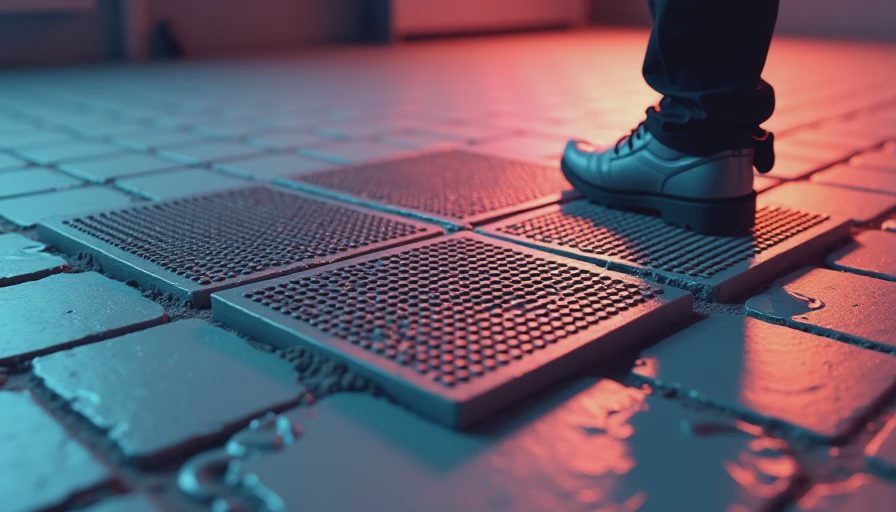
You also need to know what your health inspector expects. I'm not going to quote a specific code because it changes by city, but every inspector I've ever met checks two things: that the floor is non-porous and that it has adequate slip resistance. That's why you can't just seal a wooden floor and hope. Wood is a no-go in almost any commercial kitchen for moisture and bacteria reasons. Carpet is a joke. And the cheapest vinyl tile you can find will get eaten alive by grease and hot pans.
Maintenance matters more than the material. A good commercial kitchen flooring system lasts decades, but only if you have a floor-cleaning routine that matches it. Quarry tile needs the grout scrubbed with the right pH-neutral cleaner. Rubber needs a regular scrub but no harsh stripper. Epoxy needs a mop and the right dilution or you'll dull the topcoat. I've walked into kitchens where the $14-a-foot floor looked like a $2 floor because the staff used the wrong chemicals.
Here's my bottom line. If you're building a commercial kitchen, budget at least $10 to $14 a square foot all-in for a floor that will actually last. That's hard to swallow next to the $3.99 a square foot LVP the big box store is pushing. But I've torn out those $3.99 floors from three restaurants, and the owners all said the same thing: they wished they'd paid for the real thing the first time.
TL;DR: Treat commercial kitchen flooring like the piece of equipment it is, not a surface to pretty up. Spend the money on quarry tile and epoxy grout, pay a pro who knows how to prep concrete, and keep it clean with the right chemicals. Get that right and the floor will outlast the restaurant.


Travellers Write
No letters yet — be the first traveller to write.