The first thing homeowners get wrong about lvp flooring is assuming the product will hide a bad subfloor. It will not. Vinyl plank can look like handsome oak in the showroom, but every hump, dip, and squeaky seam underneath still has a way of introducing itself after installation. I have installed lvp flooring in kitchens, basements, rental homes, and whole-house renovations, and the material is usually the easy part. Preparation is where the job lives or dies.
For a mid-range home, lvp flooring is often the practical middle ground between cheap sheet vinyl and expensive hardwood. Material prices commonly run about $2 to $6 per square foot, while professional installation can bring the total to roughly $5 to $12 per square foot. A 600-square-foot project might land between $3,000 and $7,200 once demolition, floor prep, trim, and transitions are included. That is not pocket change, but it is far less painful than replacing a damaged kitchen floor every few years.
What lvp flooring actually is
LVP stands for luxury vinyl plank. Most planks have several layers: a clear wear layer on top, a printed design layer, a rigid or flexible vinyl core, and sometimes an attached pad. Better products use a thicker wear layer, sharper wood-grain printing, and a more stable core. The plank may resemble white oak, walnut, hickory, or painted pine, but it is still a vinyl product. That is not an insult. It is the reason it handles spills and muddy shoes better than real wood.
The term “waterproof” also needs a little sanding around the edges. A quality click-lock floor can resist surface water when the seams are properly closed, but the room is not automatically waterproof. Water can travel below the planks, collect against baseboards, or seep through an unsealed perimeter. A washing-machine leak can still damage the subfloor underneath. In a basement, moisture testing and proper drainage matter more than the label on the carton.
The wear layer is one useful comparison. A 6-mil product is generally an entry-level choice for light traffic. Twelve mil is a more sensible target for many homes, and 20 mil products are common in busy households, rentals, and commercial-style applications. Thicker does not fix every problem, but it gives the printed surface more protection from scratches and traffic wear.
Where lvp flooring earns its keep
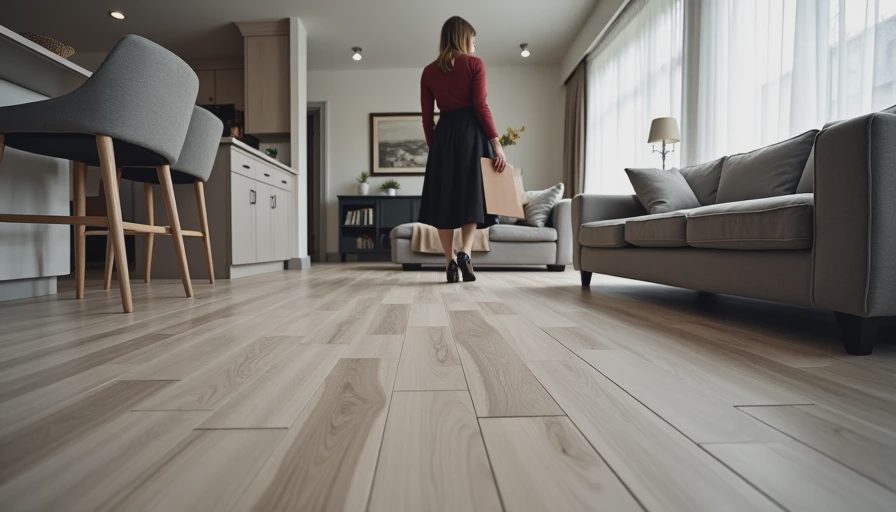
I like lvp flooring in kitchens, mudrooms, hallways, and finished basements because those areas see abuse that makes hardwood owners nervous. Dog claws, wet boots, dropped pans, and the occasional red wine incident are easier to manage. A plank can usually be replaced without tearing out the entire room, provided you saved a few unopened boxes and the locking profile is still available.
It is also comfortable compared with porcelain tile. The surface has a little give underfoot, and it does not feel like an ice rink on a January morning. In my own house, lvp flooring went into the back entry because the kids treated that space like a combination locker room and car wash. After several winters, it has held up better than the painted trim around it.
There are limits. Direct sunlight can fade some products, especially near large south-facing windows. Heavy furniture can leave impressions if it sits on narrow feet. Rolling office chairs can abrade a surface faster than ordinary walking. Felt pads, rugs with compatible backing, and sensible furniture placement prevent a lot of trouble.
The subfloor is the part nobody wants to pay for
Most click-lock floors need a reasonably flat surface. The exact tolerance comes from the installation instructions, but a common rule is no more than about 3/16 inch variation over 10 feet. That means a floor can be generally level while still being too uneven for a floating plank system. Level describes the angle; flat describes the surface. Installers care about both, but flatness is what keeps the joints from flexing.
On a concrete slab, I look for cracks, moisture, old adhesive, and low spots. On plywood, I look for loose panels, swollen edges, protruding fasteners, and squeaks. A skim coat or floor patch may cost a few hundred dollars in materials. Major correction can add $1 to $3 per square foot in labor and materials. Skipping it is how a homeowner saves $600 on preparation and later pays $2,000 to repair broken joints and reinstall the room.
Do not install over soft carpet, cushion-backed vinyl, or a damp slab just because the plank instructions seem forgiving. Pull the baseboards, check door clearances, and decide how the new height will meet tile, hardwood, and exterior doors. Transitions are small pieces, but they expose sloppy planning immediately.
Installation costs and the DIY question
A straightforward rectangular room is within reach for a careful DIY homeowner. You need a tapping block, pull bar, spacers, a sharp utility knife, a fine-tooth saw or appropriate power saw, a straightedge, and patience. Start with the longest visible wall, stagger end joints according to the product instructions, and keep the required expansion gap around fixed objects. Never hammer directly on the locking edge.
The difficult jobs are not difficult because cutting planks is mysterious. They are difficult because old houses have crooked walls, multiple floor heights, cabinets, radiators, stairs, and transitions that do not line up. A 500-square-foot open room may take a competent installer one day after preparation. A chopped-up 500-square-foot first floor can take two or three days.
Professional labor for lvp flooring often falls around $2 to $6 per square foot before major repairs. Demo and disposal can add $1 to $3 per square foot. If a quote looks unusually low, ask whether it includes moving appliances, removing shoe molding, floor patch, furniture, and disposal. I lost money on a job years ago because I priced installation but failed to price the three layers of glued-down vinyl underneath. The planks were not the problem. The archaeology was.

Choosing a product without getting fooled by the display
Bring home full-size samples from at least three price levels. Look at them beside your cabinets in daylight, then walk across them in socks. Some embossed products feel convincingly wood-like; others feel like printed plastic. Inspect several planks together because repeating patterns become obvious when the same knot appears every few feet.
Brands such as Lifeproof, COREtec, Shaw, and Mannington offer products across different construction levels, so the name alone does not answer the quality question. Read the technical sheet. Check wear-layer thickness, plank dimensions, attached pad, approved installation areas, transition requirements, and cleaning restrictions. A thicker plank is not automatically better if the locking system is weak or the pattern looks artificial.
Buy 5% to 10% extra for ordinary waste, and more for angled rooms or diagonal layouts. Keep a few boards in a dry closet. Five years later, a replacement plank is worth more than the small amount of storage space it takes.
When to choose something else
LVP is not my first choice everywhere. In a formal dining room where you want a floor to gain character for decades, real hardwood has a depth and repairability vinyl cannot match. In a sunny room with large glass walls, engineered wood or tile may offer better long-term stability depending on the product and exposure. In a bathroom, lvp flooring can work well, but the plumbing penetrations and perimeter still need careful sealing; no floor should be treated as a substitute for leak prevention.
If the existing hardwood is structurally sound, get a refinishing estimate before covering it. I have seen homeowners spend $6,000 on new material while a sand-and-finish job could have restored the original floor for considerably less. Conversely, badly cupped boards, widespread pet damage, or a floor with no remaining wear layer may justify replacement. The right answer is not always the newest product.
My rule is simple: use lvp flooring when you need practical water resistance, fast installation, and predictable maintenance. Spend more on preparation, not just on a fashionable plank. Floors take a beating every day. Do not let them beat your budget too.
TL;DR: lvp flooring is a strong practical choice, but a straight, dry, properly prepared subfloor matters more than the sample in the showroom.

Travellers Write
No letters yet — be the first traveller to write.