The first thing homeowners get wrong about veneer flooring is assuming the word veneer means cheap, flimsy, or fake. It does not. Veneer simply means a thin layer of real wood is attached to a more stable core. The quality comes down to that top layer, the core beneath it, the finish, and how well the floor is installed.
I have installed plenty of floors that looked expensive on day one and regretted plenty that looked like a bargain on the estimate. Veneer flooring can be a sensible middle ground between solid hardwood and laminate, but only when you understand what you are buying. The wrong product in a damp basement is still the wrong product, no matter how good the sample looks under the store lights.
What veneer flooring actually is
Most veneer flooring products are built in layers. The top is a thin slice of genuine hardwood, such as oak, maple, hickory, or walnut. Under that is usually engineered wood, high-density fiberboard, or another composite core. A factory-applied finish protects the surface from ordinary foot traffic, spills, and scuffs.
That construction is different from solid hardwood, which is wood all the way through. It is also different from laminate. Laminate uses a printed image of wood under a clear wear layer; veneer flooring uses real wood on the visible surface. You can usually see slight variation in grain, pore texture, and color because no two pieces of natural timber are identical.
The top wood layer may be less than 1/32 inch on an inexpensive product or closer to 1/8 inch on a premium engineered plank. That difference matters. A thin veneer is generally a clean-it-and-live-with-it floor. A thicker wear layer gives a professional more room for a light screen or, in some cases, sanding and refinishing later.
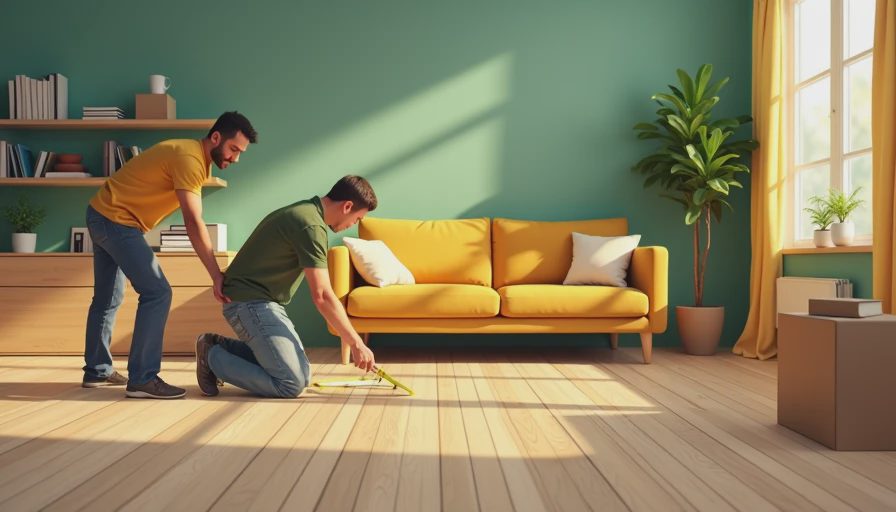
Veneer flooring versus solid hardwood
Solid hardwood has one major advantage: it can often be sanded and refinished several times. That is why old oak floors in St. Louis houses can still look good after 80 years. The downside is movement. Solid boards expand and contract with seasonal humidity, and wide planks can cup or gap when the subfloor conditions are poor.
Veneer flooring is more dimensionally stable because its layers are arranged to resist movement. That makes it useful over plywood, concrete with the correct installation system, and rooms where solid boards would be a gamble. It is also commonly available as a floating floor, which can reduce glue and fastener costs.
The tradeoff is repairability. A deep gouge through the wood layer may expose the core, and there is no magic stain that makes that disappear. A good installer can replace a damaged plank if the product is still available, but matching an older color can take patience. Solid hardwood is more forgiving over a long ownership period, while veneer flooring often wins on installation flexibility and initial price.
Realistic material and installation costs
For a mid-range product, expect material prices around $3 to $8 per square foot. Premium wide-plank oak, walnut, hand-scraped surfaces, and stronger finishes can push that to $9 or more. Underlayment, adhesive, moisture testing, trim, delivery, and waste are not always included in the box price.
Installed costs commonly land around $7 to $14 per square foot for a straightforward room. A 600-square-foot living area could therefore run about $4,200 to $8,400 before major subfloor repairs. Removal of old glued flooring, leveling, stair noses, and complicated transitions can add $1,000 to $3,000 on a typical renovation.
I once priced a job where the homeowner thought a $4.50-per-square-foot plank would keep the whole project below $5,000. The floor itself was close to that target. The slab needed grinding, patching, and moisture mitigation, and the final bill was nearly $8,000. The lesson was not that the installer overcharged. The lesson was that the floor underneath had already spent the budget.
Where veneer flooring makes sense
Veneer flooring works well in living rooms, dining rooms, bedrooms, offices, and hallways where you want the character of real wood without the movement of solid boards. Engineered construction is especially practical in newer homes with large open rooms and wider planks.
A well-finished product can handle normal family traffic for 15 to 30 years, depending on the wear layer, maintenance, pets, grit, and sunlight. That is not a guarantee stamped into every box. It is a reasonable service-life range for a quality product installed on a sound base.
Kitchens are possible, but you need discipline. Wipe standing water quickly, use mats near sinks and exterior doors, and do not treat the floor like tile. Veneer flooring is not waterproof just because the finish resists a short spill. Water can enter at plank joints and damage the core.
I am more cautious in bathrooms, laundry rooms, and below-grade basements. Some products are approved for those spaces, but approval does not cancel moisture problems. If the room smells damp, the slab reads high on a moisture test, or the foundation has a history of seepage, solve that issue before selecting the finish surface.
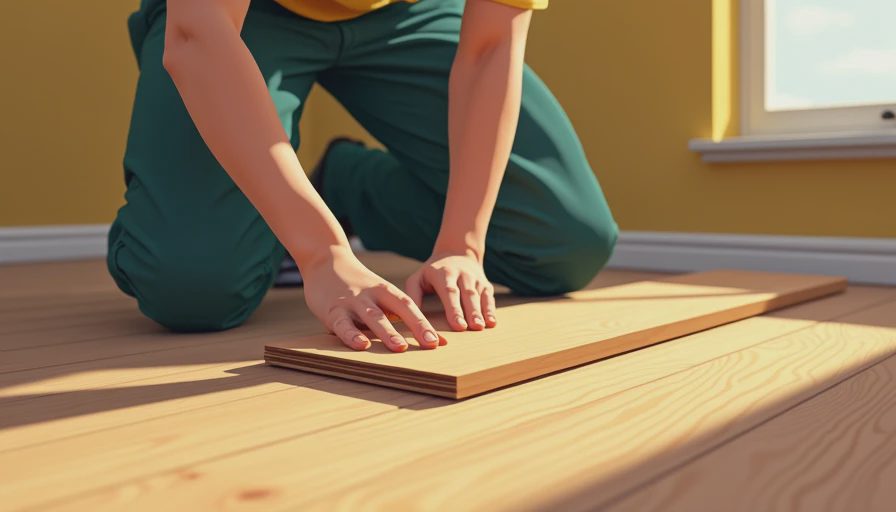
Installation details that decide the result
Preparation is where good floors are won. The subfloor should be clean, dry, structurally sound, and flat within the manufacturer's stated tolerance. A little squeak can become a loud squeak after the new floor goes down. A hump that looks harmless across a bare room can telegraph through a floating installation.
For concrete, the installer should test moisture instead of guessing by looking. Depending on the product, installation may require a vapor barrier, approved adhesive, or a floating method with underlayment. On plywood, loose panels need fastening and damaged sections may need replacement.
Leave the correct expansion gap around walls, cabinets, pipes, and fixed objects. That gap gets covered by baseboard or shoe molding, so there is no reason to cheat it. Do not pin a floating floor under heavy built-ins unless the installation instructions specifically allow it. The floor needs room to move as humidity changes.
Buy extra material from the same production run when possible. Five to ten percent waste is common for a rectangular room, and more is reasonable for angled layouts or many closets. Keep several unopened boards for future repairs. Manufacturers discontinue colors faster than homeowners expect.
Can you install it yourself?
A competent DIYer can install click-lock veneer flooring in a square bedroom with a straight layout, basic tools, and a patient approach. You will still need a tapping block, pull bar, spacers, a saw, and enough time to prepare the base correctly. The clicking part is not the hard part. The hard part is keeping rows straight, managing door jambs, handling transitions, and avoiding damage to the locking edges.
Hire a professional when the floor runs through several rooms, the subfloor is uneven, the product requires glue, or stairs are involved. A bad installation can create hollow spots, open joints, buckling, and warranty arguments. Saving $1,500 on labor is not a bargain if removing and replacing the floor costs $5,000 next year.
Get quotes that separate material, installation, demolition, leveling, moisture work, trim, and furniture moving. That makes the low bid easier to compare with the honest bid. Ask who will perform the work, how the subfloor will be tested, and what happens if a damaged board appears in the shipment.
How to maintain veneer flooring
Use a vacuum with a hard-floor setting or a soft microfiber dust mop. Grit acts like sandpaper under shoes, especially near exterior doors. Clean spills promptly with a lightly damp cloth and use the cleaner recommended for the finish. Avoid soaking the floor, steam mops, wax, and generic products that leave a greasy film.
Put felt pads under chairs and tables, replace them when they collect grit, and use protective runners during furniture moves. Keep indoor humidity reasonably stable rather than chasing a perfect number. Direct sunlight can change wood color, so rotate rugs and use window coverings when strong afternoon light hits the same boards every day.
If a board is deeply scratched, do not grab a random stain marker and hope for the best. Test repairs in a hidden area, or have a flooring professional assess whether one plank can be replaced. Small maintenance decisions are cheaper than turning one damaged area into a larger patch.
Veneer flooring is worth considering when you want genuine wood character, a more stable construction, and a realistic installed cost. Buy the thickest useful wear layer your budget allows, inspect the subfloor before ordering, and keep water-sensitive rooms on a short leash. Floors take a beating every day. Don't let them beat your budget too.
TL;DR: Choose veneer flooring for real wood character and installation flexibility, but spend money on subfloor preparation before you spend it on a wider plank.


Travellers Write
No letters yet — be the first traveller to write.