How to Choose a Warm Wood Floor That Won't Leave You Cold
Every month, someone calls me up with a floor that looks like a gray beach in a rainstorm. They ask me if it's worth ripping it out to get a warm wood floor. My answer usually surprises them: maybe you don't need to replace anything. Most people think a warm wood floor is a color you buy. It's not. It's a finish, a species, and an undertone working together. Get those right, and you can transform a cold, washed-out room without spending $10,000. In the last 18 years, I've nailed down enough floors to know that warm is a feeling, not a paint swatch.
What Makes a Warm Wood Floor Warm?
Walk into a room with red oak floors and your brain registers warm. Walk into a room with ash stained gray and your brain registers cold. The difference is undertone. Warm tones carry yellow, orange, or red. Cool tones carry green, blue, or purple. A warm wood floor doesn't mean dark. It means the finish lets the wood's natural amber come through. Oil-based polyurethane does this. Water-based polyurethane does not. That's why the same exact oak board can look golden under one finish and gray under another. Light plays a role, too. South-facing windows pull out the caramel in red oak, while north-facing rooms wash it out. That's why two identical homes can have two completely different feelings with the same floor.
The Best Species for a Warm Wood Floor
Red oak is the workhorse of the Midwest. It has a pinkish, amber cast that shows up clearly under a clear finish. Hickory is even more striking, with color variation from pale blond to deep caramel. If you want a rich, reddish brown, Brazilian cherry is beautiful but costs $9 to $14 a square foot installed. Domestic walnut is naturally dark with a chocolatey warmth. Each of these species makes a warm wood floor you won't have to fight.
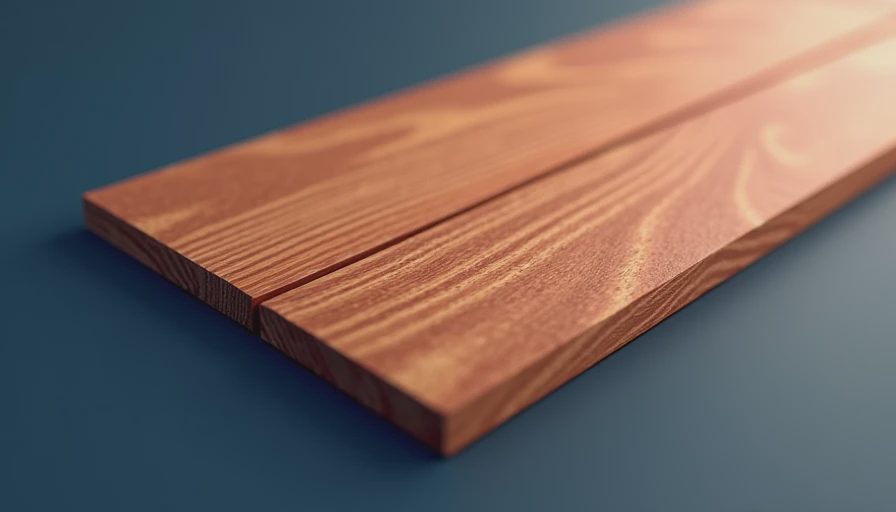
If you're on a budget, white oak isn't the first thing I'd grab for warmth, but a stain like Duraseal Provincial or Special Walnut can push it there. Engineered versions of red oak and hickory run $5 to $10 a square foot, which gives you the same look without the solid-wood premium. And don't overlook bamboo that's been carbonized; it's got a natural caramel tone that's surprisingly warm.
Finish Options That Change Everything
Here's where most homeowners get tripped up. You can pick the warmest species in the store and then do a water-based finish that flattens the color. If you want a warm wood floor, choose an oil-modified polyurethane. It adds a honey tone that deepens over time. A hardwax oil like Rubio Monocoat also warms things up, but it costs more and needs occasional reapplication. I've installed Bona Traffic on jobs where the client asked for a natural look, and it looks good, but it doesn't add warmth. Know the difference before you sign the check. Also, a prefinished floor like those from Bruce or Shaw is already tinted, so you don't get the same freedom. If you want control over the final tone, buy unfinished and have it finished on-site. That's the only way to really dial in the warmth to match your cabinets and trim. It takes longer and costs about $1 to $2 more per square foot, but it's the difference between a floor you tolerate and one you show off.

What You'll Actually Pay
Here's the number people don't expect. Refinishing an existing hardwood floor costs $3 to $5 per square foot. Ripping it out and putting in a new warm wood floor costs $8 to $15 per square foot installed, depending on species. On a 1,500-square-foot main floor, that's the difference between $6,000 and $18,000. In my own house, I sanded down a tired oak floor and put an oil-based finish on it. The warm wood floor that came out is the one thing every guest comments about. We could have replaced it, but sanding it saved us nine grand. That's not a sales pitch; that's a trip to your local rental counter and a weekend with a drum sander. If your subfloor is in good shape and your existing boards are solid oak, refinishing is almost always the smarter move. Save the full replacement for when the wood is too thin, too damaged, or too layered with old finishes to sand again.
Common Mistakes That Kill the Warm Look
The biggest mistake is buying cheap laminate and expecting it to act like wood. Laminate has a photographic layer that repeats endlessly, and the embossing never matches the grain. It can look warm for about a year, then the sheen fades and you're stuck with a plastic-looking floor. Another mistake is choosing a water-based sealer over a stain that you specifically picked for warmth. Sealers can mute the stain. And don't forget transitions. If you're putting a warm wood floor in one room and cold tile in the next, the abrupt shift is jarring. Use a transition strip that ties both tones together, or you'll see the line every time you walk through the doorway.
The Bottom Line
TL;DR: A warm wood floor is not a color. It's the combination of species, finish, and light. Start with the floor you already own before you tear it out. Floors take a beating every day. Don't let them beat your budget too.


Travellers Write
No letters yet — be the first traveller to write.